Welcome to the ETA Blog!
Exploring What’s Now, and What’s Next in Business and Technology
the US AI Congress Convenes American AI Leaders May 27-28 at the National Press Club in Washington DC
The decisions shaping America's AI future aren't being made at tech conferences — they're being made in Washington, and this May, the US AI Congress is putting executives, policymakers, and federal leaders in the same room at the National Press Club for two days of programming that will define the next era of AI strategy. If you're leading AI adoption, influencing policy, or competing in a sector being reshaped by artificial intelligence, this is the one event in 2026 you cannot afford to miss.
Anthropic Releases Claude Opus 4.7: What It Means for the Enterprise Technology Workforce
Anthropic's Claude Opus 4.7 just raised the bar for enterprise AI — outperforming GPT-5.4 on real-world software engineering, tripling visual processing capacity, and introducing autonomous multi-step workflows that fundamentally change how technical teams operate. For technology executives, this isn't a model update to hand off to your IT team — it's a strategic inflection point that will reshape staffing models, document workflows, and cybersecurity policy across your entire organization.
Quantum Computing in 2026: The Year the Lab Meets the Real World
Quantum computing has spent two decades being "five years away" — but in 2026, error-corrected machines are shipping to customers, photonic startups are going public, and the field is maturing fast enough that enterprise leaders can no longer afford to treat it as a research curiosity. For technology executives, the window to build quantum readiness isn't when the technology is fully mature — it's right now.
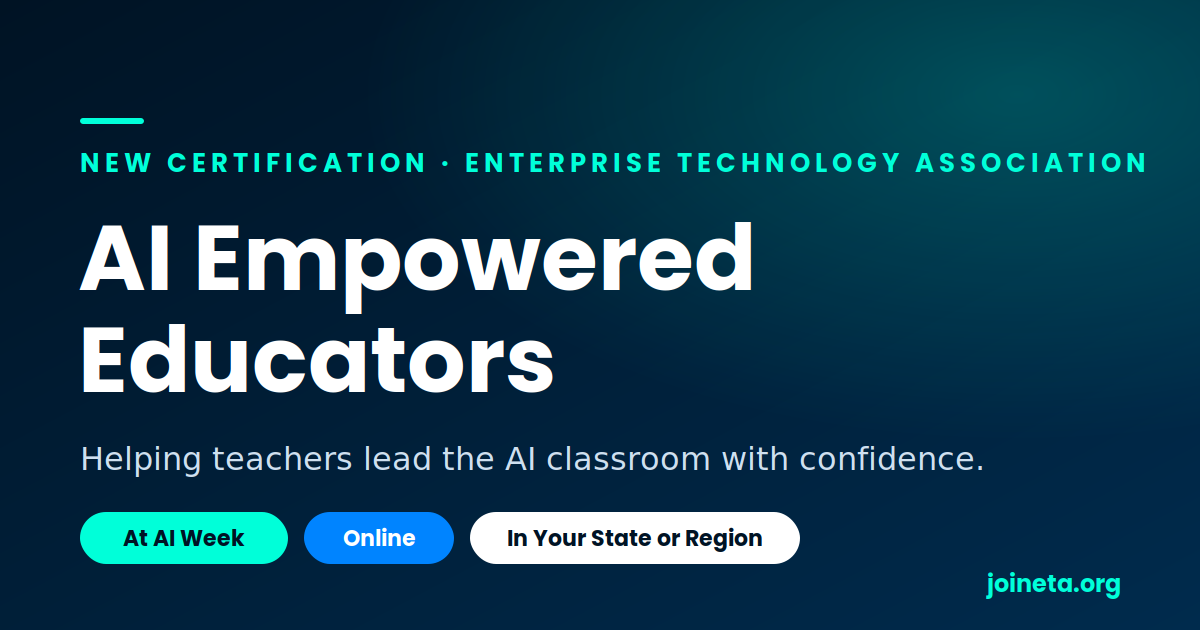
NSF Invests $11M to Expand AI Professional Development for K-12 Teachers Nationwide
The National Science Foundation just committed $11 million to train up to 3,000 K-12 teachers in AI fundamentals — a federal signal that the pipeline for AI-ready talent starts in the classroom, not the boardroom. For technology executives building long-term workforce strategies, understanding how this education infrastructure is being built today is essential to knowing where your talent will come from tomorrow.
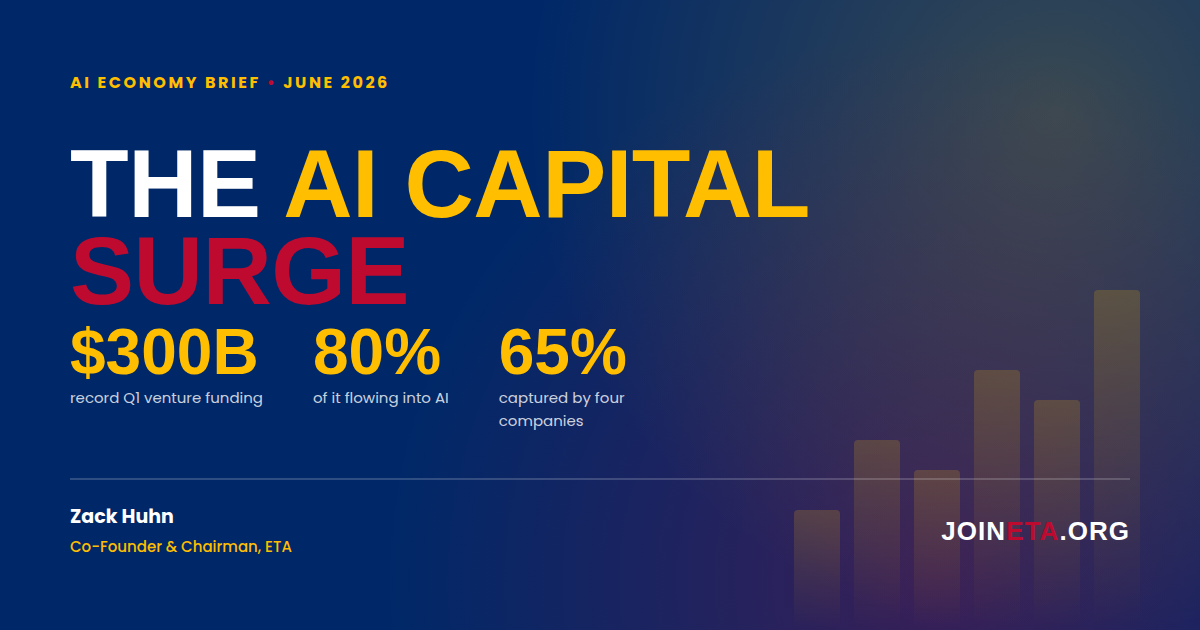
$300 Billion in One Quarter: What the Biggest AI Funding Surge in History Means for the American Workforce
In a single quarter, $300 billion flooded into AI — with 80% going directly to AI companies — marking the largest venture funding surge in history and signaling that the AI infrastructure race is no longer a forecast, it's a fact. For technology executives, the urgent question is no longer whether to commit to AI, but whether your organization has the talent, strategy, and speed to compete in an economy where the capital has already placed its bets.
The FY2027 Budget Request: What Business and Technology Leaders Need to Know
The White House FY2027 budget proposes a 55% cut to the National Science Foundation and a 29% reduction in federal workforce development funding — even as it declares AI a national strategic priority. For technology executives, the gap between Washington's AI ambitions and its investment reality has never been wider, and the organizations that understand what's coming will be the ones positioned to act.
OpenAI Closes $122 Billion Round at $852 Billion Valuation — The Largest Private Fundraise in History
OpenAI just closed a $122 billion funding round at an $852 billion valuation — the largest private fundraise in the history of capital markets, backed by Amazon, Nvidia, SoftBank, and Microsoft. For technology executives, this isn't just a financial milestone: it's the clearest signal yet that AI infrastructure is being treated as the next foundational layer of the global economy, and every organization's competitive position depends on how fast they respond.
WHOOP Raises $575 Million at $10 Billion Valuation, Signaling the Convergence of AI, Wearables, and Preventive Health
WHOOP just closed a $575M Series G at a $10 billion valuation — and its backers include Abbott, the Mayo Clinic, and a roster of global sports icons. For technology executives, this raise is more than a headline: it's a signal that AI-powered preventive health is becoming serious enterprise infrastructure, and the talent and strategic implications are impossible to ignore.
Where Infrastructure Meets Intelligence: Atlanta’s AI Moment
Atlanta isn't experimenting with AI — it's running it inside the world's busiest airport, global logistics networks, fintech systems processing millisecond decisions, and stadiums preparing for a worldwide audience. For technology executives, the city is a live case study in what it looks like when AI moves from proof-of-concept to enterprise infrastructure at real scale.
Florida’s TENEX.AI Raises $250 Million, Crosses Unicorn Threshold in AI Cybersecurity Push
Florida's TENEX.AI just hit unicorn status with a $250M raise — and it's rewriting the rules of AI-native cybersecurity at enterprise scale. As agentic AI transforms threat detection and response, the question for every technology executive isn't whether to pay attention, but whether their organization is positioned to keep pace.
Data Centers Are Going to Space. Here’s What You Need to Know.
A startup just became Y Combinator's fastest-ever unicorn by betting that the future of AI infrastructure isn't on Earth. Here's what Starcloud's $170M raise signals about the AI compute bottleneck, where serious infrastructure capital is flowing next, and what technology executives need to factor into their long-term strategy now.
The Federal Government Just Went All-In on AI Readiness. We’ve Been Building the Playbook.
The federal government just made its boldest coordinated move yet on AI workforce readiness -- and the infrastructure it's describing at national scale is one ETA has already been building on the ground. Here's what the DOL and NSF announcements mean for executives who need to move their organizations from AI curiosity to capability before the window closes.
The Federal Government Just Validated What We’ve Been Building in Ohio
The federal government just launched a national AI literacy initiative, and it looks a lot like what ETA has already been building on the ground in Ohio for the past year. Here's what the DOL's "Make America AI-Ready" program validates about regional AI workforce strategy, and what forward-thinking executives need to know about what comes next.
White House National AI Legislative Framework
The White House just released its National AI Legislative Framework, and one of its seven pillars directly names workforce education as a federal priority. Here is what it means for your organization.
The Workforce of the Future: What Leaders Are Getting Wrong (And Right)
Leaders say they’re building for the future of work—but their systems tell a different story. Skills-based hiring without skills infrastructure, overwhelmed middle managers, AI layered onto broken workflows, and “flexibility” in name only are creating deeper cracks in how organizations attract, develop, and retain talent. The companies that win won’t be the ones with better buzzwords or prettier strategy decks—they’ll be the ones willing to redesign how work actually happens.
The 2026 Technology Budget: Five Critical Shifts Every Executive Must AddresS
As we move deeper into 2026, technology leaders face a budgeting environment that looks nothing like the incremental planning cycles of the past. Artificial intelligence has moved from experimentation to enterprise-scale reality, cybersecurity threats are escalating in both frequency and sophistication, and economic uncertainty is forcing every dollar to prove its strategic value.
The result is a fundamental shift in how technology budgets must be built. AI is no longer a single line item—it’s a portfolio investment touching every major system. Cloud strategies are evolving from migration to ruthless optimization. Data governance and AI sovereignty are becoming board-level concerns, not back-office conversations.
In 2026, the technology budget isn’t just a financial document. It’s a strategic weapon. The executives who treat it that way—balancing aggressive investment with disciplined governance—will be the ones who turn disruption into advantage.
OpenClaw, Clawbot, and the Rise of Personal AI Agents
AI is no longer just answering question, it's starting to execute work, coordinate systems, and act on your behalf. Here's what the OpenClaw story means for business leaders navigating the next phase of AI adoption.
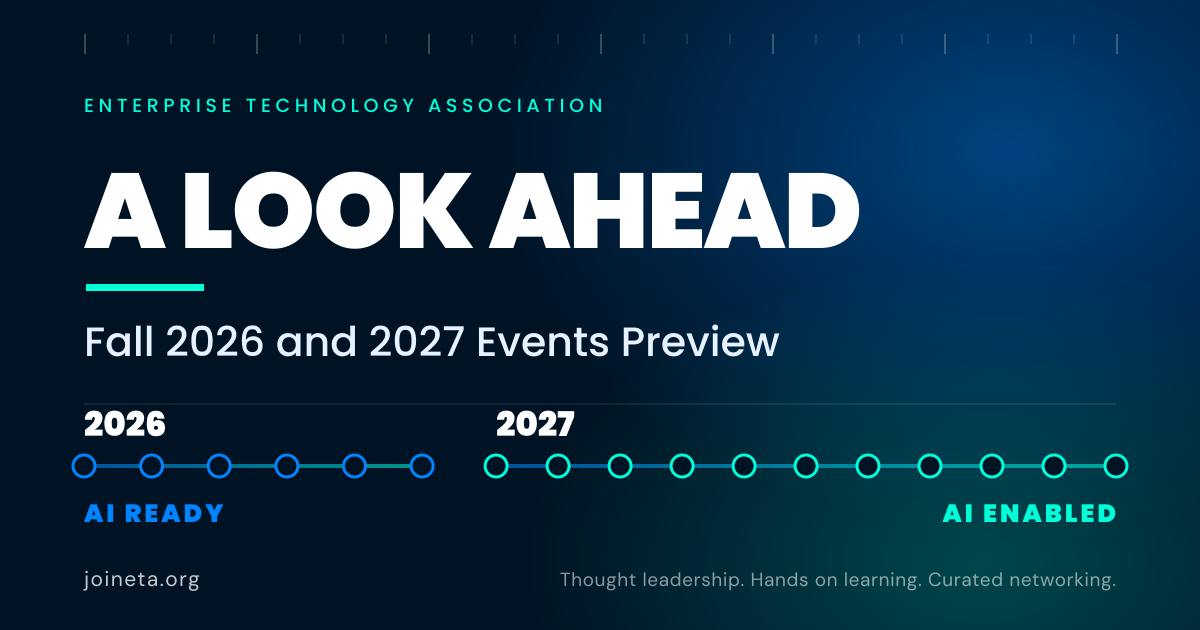
Previewing 2026: A Breakthrough Year for the Enterprise Technology Association
The only thing moving faster than technology is the need to understand it. That’s why ETA is expanding its national programming, strengthening its member offerings, and doubling down on education, enablement, and ecosystem building in 2026.
Build or Buy: Exploring AI Solutions for Business
Artificial intelligence is transforming how companies operate, compete, and create value. Yet for many leaders, one strategic question continues to surface in every boardroom, planning session, and budget cycle: